
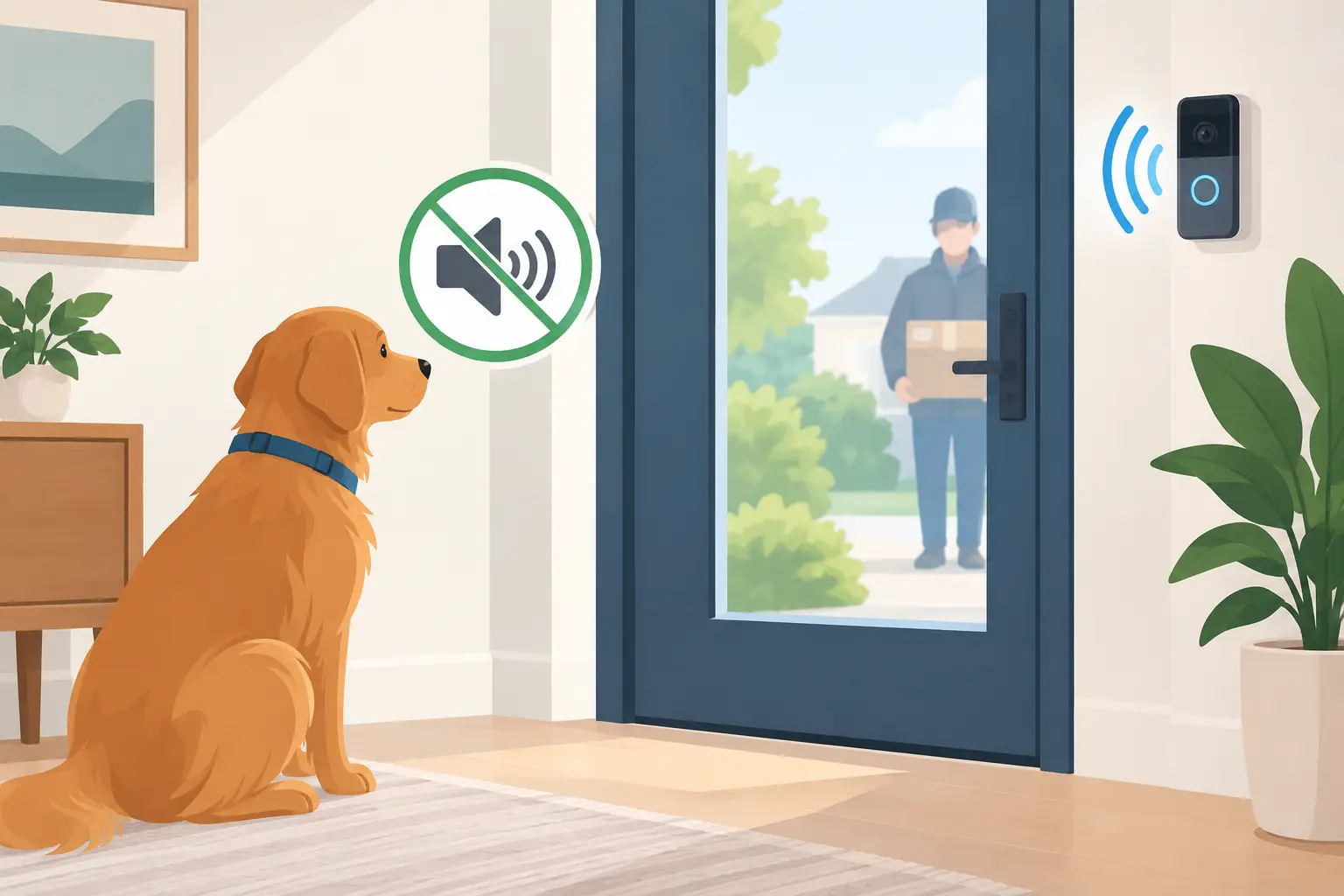
How to Reduce Doorbell Barking in Your Home
The doorbell rings, and your dog is suddenly sprinting, barking, jumping, and unable to hear a word you say. For many Tampa Bay households, this routine makes deliveries stressful, visitors uncomfortable, and the front door feel like a daily trigger. Learning how to reduce doorbell barking is not about teaching your dog that visitors are bad. It is about giving them a clear, calmer job when someone arrives.
Doorbell barking is a normal response for many dogs, especially dogs that are alert, territorial, under-socialized, or simply excited to meet people. The behavior becomes a problem when your dog rehearses it every day and no one interrupts the pattern with consistent direction. With management, repetition, and the right obedience foundation, most dogs can learn to respond differently.
Why Dogs Bark When the Doorbell Rings
The sound of the doorbell predicts something big: a person at the door, movement outside, a package delivery, or an exciting new interaction. Some dogs bark because they want the visitor to go away. Others bark because they want to get to the visitor as quickly as possible. The bark may sound the same, but the motivation can be very different.
For a nervous or protective dog, barking can be a way to create distance. If the delivery driver leaves after the dog barks, the dog may believe the barking worked. For a social, high-energy dog, the doorbell can become a starting bell for jumping, rushing, and demanding attention. In both cases, repeated practice strengthens the response.
Your dog may also be reacting to the overall front-door routine, not only the bell. Footsteps on the porch, a knock, the sound of a truck, keys at the door, or family members hurrying to answer can all add excitement. That is why solving the issue requires more than telling your dog to be quiet after the barking has already started.
How to Reduce Doorbell Barking With a New Routine
The goal is simple: when the doorbell rings, your dog should move to a designated spot and remain there until released. A bed, raised place cot, crate, or mat can work well. The location should be far enough from the entry that your dog is not able to rush the doorway, but close enough that they can settle without feeling isolated.
Before introducing the doorbell, teach the place command when the house is quiet. Guide your dog onto the spot, reward calm behavior, and release them after a short pause. Build duration gradually. Your dog should understand that going to place means staying there, even when you move around the room.
Once that foundation is reliable, add low-level distractions. Walk toward the front door, touch the handle, open and close it, or have a family member step outside and return. If your dog leaves their spot, calmly guide them back. Avoid turning the exercise into an argument. Clear direction, followed by consistent follow-through, teaches more than repeated verbal correction.
Next, practice with the actual doorbell. Ask a family member or friend to ring it while you are ready to direct your dog to place. At first, keep the session controlled and short. Your dog does not need to greet anyone right away. In fact, many dogs improve faster when they learn that a ringing bell does not automatically mean access to the front door.
Reward the behavior you want: moving to place, looking to you for direction, settling quietly, and staying put while the door opens. If treats raise your dog's excitement too much, use calm praise, a short release to a toy, or access to a greeting only after they have shown control. What works depends on the dog in front of you.
Do Not Practice During a Real Problem Moment First
Trying to train for the first time when a delivery person is standing outside often sets everyone up to fail. Your dog is already over threshold, you are rushed, and the visitor may not be willing or able to wait. Start with planned practice sessions where you can control the timing and intensity.
Use a familiar helper when possible. Ask them to ring the bell, wait quietly, and follow your instructions. Begin with your dog on leash if rushing the door is a concern. The leash is not a substitute for training, but it gives you a safe way to prevent your dog from rehearsing the behavior while they learn a better response.
For real deliveries, management is still valuable. Put your dog behind a closed interior door, in a crate, or on a secure place command before answering. This protects your training and prevents an accidental door dash. A dog that is learning does not need unlimited opportunities to make the wrong choice.
Keep Your Own Response Calm and Consistent
Dogs are highly aware of household energy. If everyone runs to the window, shouts, or repeatedly says “quiet” while the dog is barking, the situation can become even more exciting. Your response should be predictable: acknowledge the doorbell, give one known command, and help your dog follow through.
Avoid yelling over the barking. From your dog’s perspective, loud human voices may sound like the family has joined the alarm. Instead, use a calm, firm cue such as “place” or “bed.” If your dog knows the command, direct them there. If they do not yet know it, go back to teaching the skill away from the doorbell.
Consistency matters across the household. If one person allows your dog to rush the door and another expects them to stay on a mat, the dog receives mixed information. Decide what greeting behavior is acceptable and have every family member support the same routine.
Meet Your Dog’s Daily Needs Before Expecting Control
A dog with excess energy, limited structure, or little mental stimulation is more likely to explode at normal household events. Daily walks, obedience practice, play, scent work, and appropriate social exposure all support a more balanced dog. Exercise alone will not resolve doorbell barking, but a dog that has had its needs met is usually more prepared to listen.
This is especially true for young dogs and high-drive breeds. Puppies may need frequent, short training sessions and supervised exposure to visitors. Adult dogs with a long history of barking may need more time to change the habit. Progress is rarely a straight line, particularly if guests, deliveries, and family schedules are unpredictable.
If your dog becomes stiff, growls, lunges, snaps, or shows intense fear at the door, treat the behavior seriously. Do not force greetings or ask visitors to “help socialize” your dog in the moment. Those reactions can signal anxiety, territorial behavior, or a safety concern that needs a structured plan.
When Professional Training Can Help
Doorbell barking is often connected to larger obedience or behavioral challenges. A dog that ignores commands at the door may also struggle with leash control, impulse control, recall, or boundaries in other parts of the home. Addressing the full picture creates more dependable results than working on one symptom alone.
Professional support can be especially helpful when barking has escalated into rushing the door, jumping on guests, guarding the entryway, or reactive behavior. An experienced trainer can evaluate what is driving the response, teach you how to handle it safely, and build a plan that fits your household. SafeK9 works with both dogs and owners because lasting behavior change depends on what happens between training sessions, not just during them.
A calm front-door routine is built one repetition at a time. Start when the house is quiet, make the expected behavior clear, and practice before you need it. Your dog does not have to love every doorbell ring, but they can learn that looking to you and settling into place is the better choice.


Comments